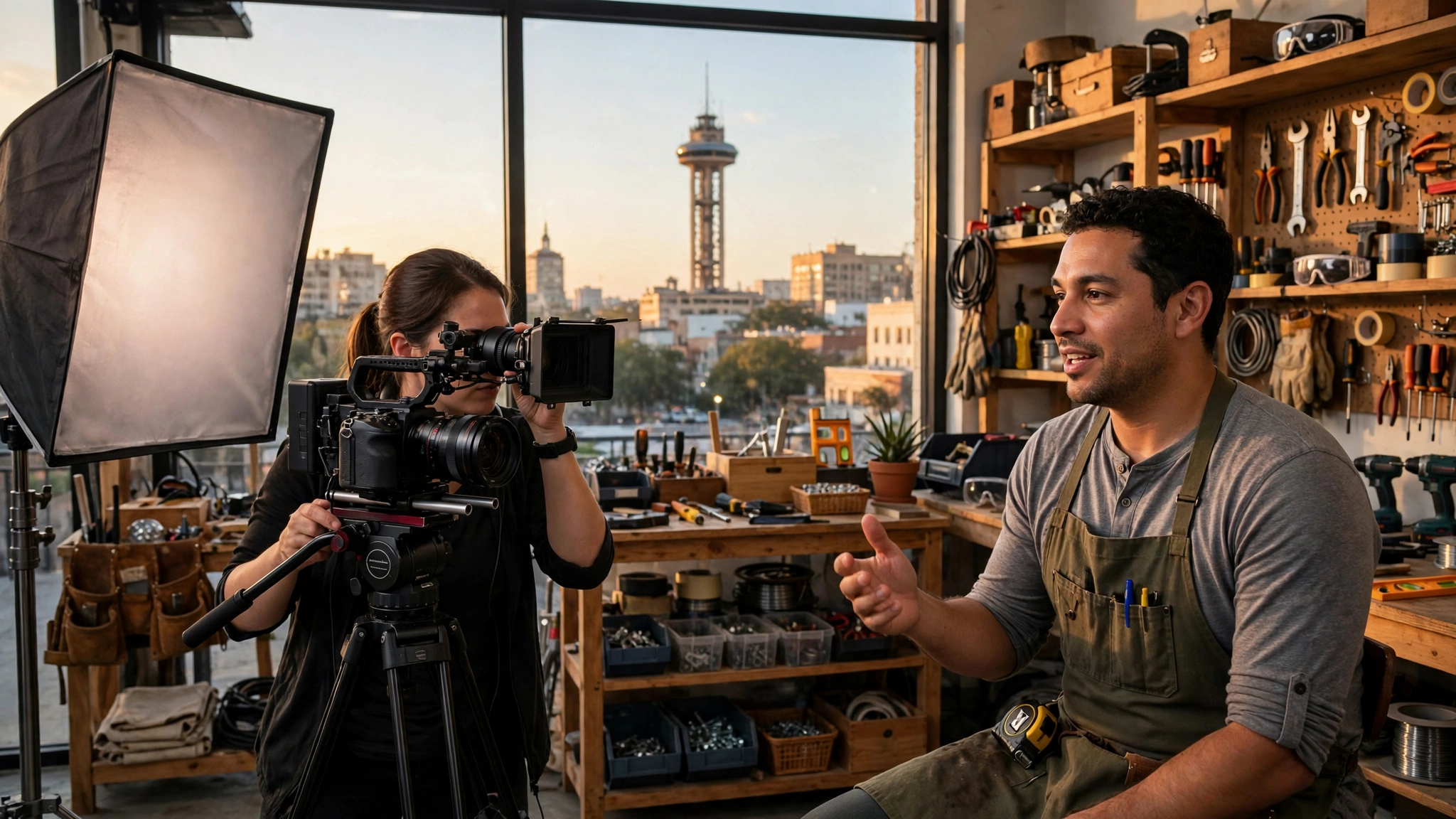
A basic single-camera shoot in San Antonio runs $500 to $1,500 and delivers one or two finished videos. A full cinematic production runs $2,500 to $8,000 — cinema cameras, a lighting crew, clean audio, direction on location, and full post-production. Those are PMT Digital's published prices, live on our video production page.
But the shoot price is the wrong number to compare. The number that decides whether video was worth buying is the cost per finished asset. A $3,000 shoot that delivers 25 finished pieces costs $120 per asset. A $500 shoot that delivers two clips costs $250 per asset — for footage that took a fraction of the planning. The rest of this post is what the national and Texas data says, what PMT charges, what each budget actually buys, and how to read a quote before you sign it.
What the market data says in 2026
Video pricing guides disagree on the ceiling, but they agree on the shape: you are mostly buying crew days and editing hours.
| Source | What it measured | The number |
|---|---|---|
| Vidico 2026 pricing guide | Simple social content, per project | $1,500–$5,000 |
| Vidico 2026 pricing guide | Corporate / explainer video, per project | $4,500–$20,000 |
| Vidico 2026 pricing guide | Solo videographer, per day | $600–$1,200 |
| Final Cut Multimedia (Oct 2026) | Most professional US business videos | $2,000–$20,000 |
| Final Cut Multimedia (Oct 2026) | Small-business one-day shoot with basic editing | $3,000–$7,500 |
| Think Branded Media, Dallas (May 2026) | Solo videographer, per day | $900–$1,500 |
| Think Branded Media, Dallas (May 2026) | Full production team, per day | $5,000–$10,000+ |
| Ruah Creative House (Aug 2026) | Freelance videographer, per day by experience | $400–$4,000+ |
Two things stand out. First, a day rate is not a finished video. Ruah's 2026 rate guide warns that a videographer's day rate may cover filming only — editing, color, captions, vertical cutdowns, music licensing, and revisions are often billed separately. Second, where the money goes is predictable: Vidico's guide puts pre-production at 15–25% of a typical budget, the shoot itself at 40–55%, and post-production at 25–35%. A quote that looks cheap usually shrinks one of those three — and the one that gets shrunk first is the planning and the editing, which is the part your customers actually see.
For a Texas comparison: a Dallas production company's May 2026 guide puts most mid-sized corporate projects at $7,000 to $15,000. San Antonio buyers do not have to pay Dallas agency prices to get cinema-camera work — but they should expect the same structure: crew, gear, and post-production, priced by scope.
What PMT Digital charges — published on our own site
These are PMT's published prices, verified today on our video production and short-form video pages:
- Basic Single-Camera — $500 to $1,500. One camera operator, minimal lighting, basic editing, one or two finished videos. Fine for a simple testimonial. Not built for ads.
- Full Cinematic Production — $2,500 to $8,000. Sony cinema cameras, professional lighting, clean audio capture, on-location direction, and full post-production: color grading, captions, music, and delivery in every format you need — vertical for Reels and TikTok, horizontal for YouTube and your website, square for the Facebook feed.
- The PMT shoot model. One 2–4 hour shoot at your business produces 12–30 finished assets: a long-form brand video, short-form clips, ad-ready hooks, and still frames. For short-form specifically, one batch session produces 30–90 finished vertical assets. One shoot fills your content calendar for 30–60 days.
The honest way to compare those numbers to a freelancer's day rate is per finished asset. At $120 per asset on a planned batch shoot, you are paying less per usable video than the $250-per-clip math on a cheap one-off — and every asset was planned before the camera turned on, not improvised on the day.
What each budget actually buys
| Budget | What it usually buys | Right for |
|---|---|---|
| Under $500 | Your phone, your time, template editing. One or two usable clips if the light and audio cooperate. | Testing an idea before spending real money. |
| $500–$1,500 | A basic single-camera shoot: one operator, basic lighting and editing, one or two finished videos. Or a freelancer day — filming only, editing extra. | A simple testimonial or announcement video. |
| $2,500–$8,000 | A full cinematic production: planned shot list, cinema cameras, lighting and audio crew, direction, full post-production, 12–30 finished assets in every format. | Businesses running ads, or that need a month or two of content from one shoot. |
| $10,000+ | Multi-day or multi-location productions, larger crews, talent, broadcast-level campaigns (national guides put commercial work at $15,000–$50,000+). | Campaigns where the video is the product launch itself. |
What moves the price up or down
Five things decide where a quote lands:
- Crew size. One operator is one day rate. Add a second camera, a lighting hand, and a sound recordist and you have multiplied the day — Think Branded Media's Dallas guide prices a full team at $5,000–$10,000 or more per day against $900–$1,500 for a solo videographer.
- How many finished assets. Editing is 25–35% of a typical budget. One hero video is one edit. Thirty cutdowns in three formats, captioned and graded, is a post-production project of its own — and it is also where the value is, because it is what you actually publish for the next two months.
- Pre-production. A planned shoot — shot list, script outline, hook variations written before the day — costs more than showing up and filming. It also finishes in 2–4 hours instead of eating your whole day, because nothing is improvised on set.
- Locations and days. A second location or a second day is close to a second shoot. Batching everything into one session at your business is the single biggest saving available.
- What is included after the shoot. Captions, color grading, music licensing, format exports, and a revision round are either in the quote or they are not. Ask before you compare two numbers.
Doing it yourself, hiring a freelancer, or hiring a production team
Your phone costs nothing but your time, and for quick, honest updates it is the right tool. Where it breaks is the work customers judge you by: your homepage video, your testimonials, your ad creative. Viewers forgive a casual clip on social media. They read shaky, echoing footage in an ad as a statement about how you run your business.
A freelancer at $600–$1,200 a day (Vidico 2026) is a good buy for one defined video — an event, a single testimonial — if you confirm in writing whether editing, captions, and revisions are included or extra. What you do not get is the system around the shoot: the pre-production planning, the multi-format asset library, and a team that is still there next month when you need the next batch.
A production team is the most expensive route per day and usually the cheapest per finished asset, because the day is planned to produce a library, not a clip. That is the trade this whole post comes down to: price per day versus price per usable video.
How hiring PMT Digital works
It starts with a shoot plan built around your goals, audience, and platforms — shot list and content brief before we arrive, so the 2–4 hours on location are spent filming, not deciding. We shoot on Sony cinema cameras with professional lighting and wireless audio, and we direct your team through every setup, so nobody has to guess where to stand or what to say. Post-production takes 7–14 business days; you get a private review link, one round of revisions is included, and final files are delivered 3–5 business days after approval, every asset labeled by use case and platform. PMT-reported: 33M+ organic views generated across our work.
One business per territory in San Antonio. If you want the video plan and the exact price for your business, Request a Call or Apply for Exclusivity.